Many cover artworks from the 1950s through 1980s come down to one key element of design - typography. Seeing as photography and printing were only at the beginning of their developments, many designers would call on typography and colour coding to create engaging, unique covers for albums released at the time.
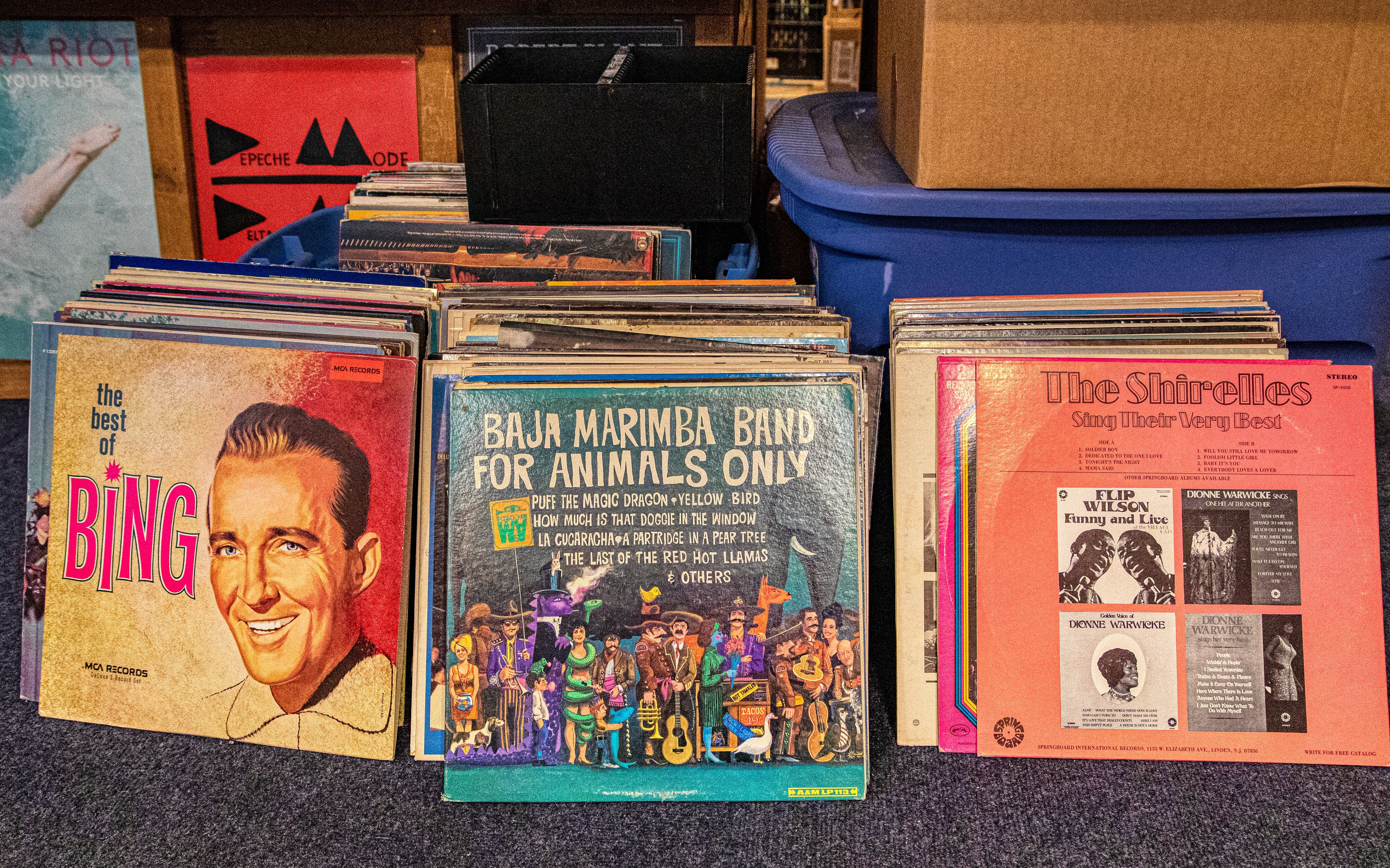
“They’re all unique and speak to what was special about this area of design that has often been the most dynamic and experimental outlet for graphic designers. Album covers are a great window into the visual spirit of an era or subculture, and the type they use can be the most expressive part of the artwork” - Shawn Hazen
Shawn Hazen, passionate graphic designer, has been collecting type-only album covers since 2012, putting together an amazing compilation named Typophonic. Here are our top picks from his collection, debunked.
Typography conveys a style that captures the flavor of the music. Whether it’s flamboyant funk or a hyper-minimal ECM cover. Every “zeitgeist” has its associated type, and members of the subculture identify with the type from their world. - Shawn Hazen
Lee Morgan - The Rumproller (1965)
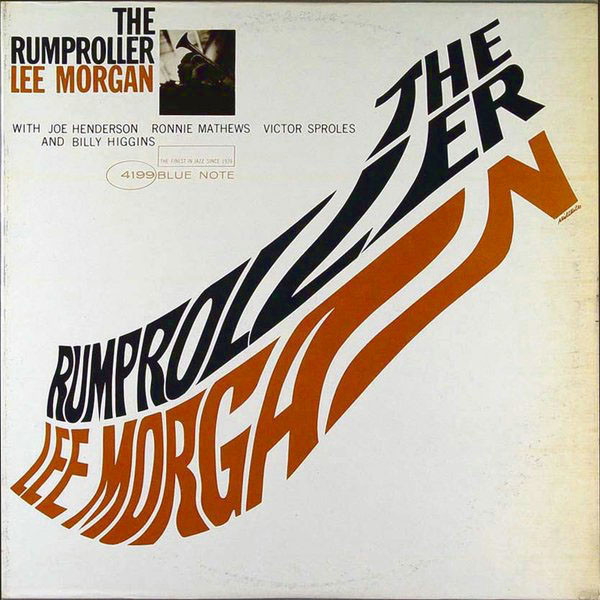
This eye-catching cover could be considered a masterpiece of handicraft, considering how designer Reid Miles achieved such a fluid look of the letters. Shawn Haze explains how difficult it must’ve been for Miles to put together one piece of distorted sans-seriff text resembling a shoe:
“He probably had to get the type output from a phototype place, curl up and crumple the output, photograph or stat-cam it, and maybe redraw the whole thing and get new camera ready art—pasted-up manually, of course.”
XTC - Go 2 (1978)
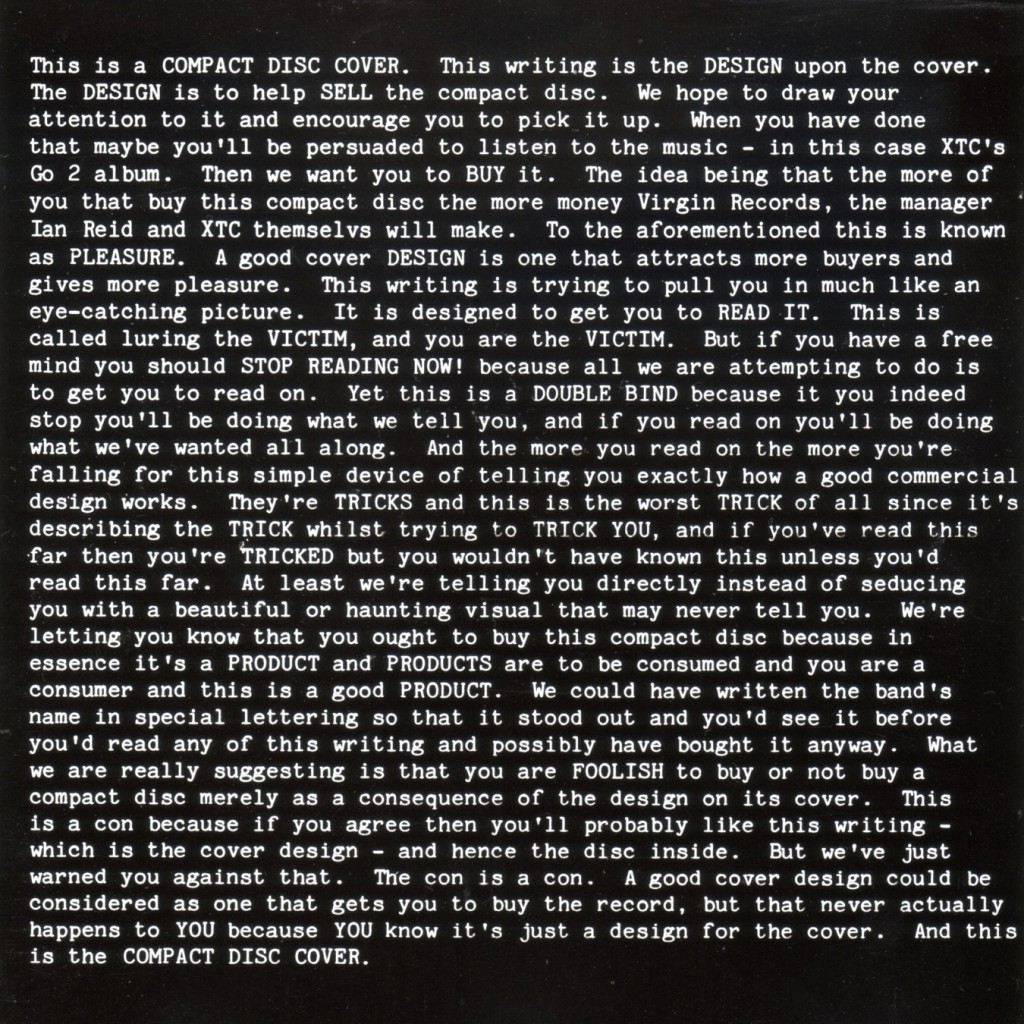
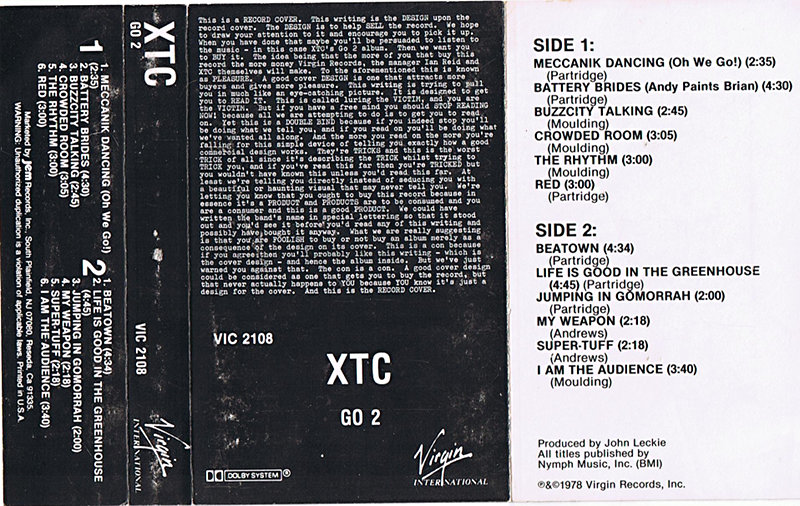
English band XCT took the practice of using type-only artwork on the cover quite literally. The cover was designed and executed by the art design group Hipgnosis, and it consists of “an essay about how album covers are used to attract buyers of the album.” (Sonali Vora, 2010).
“This writing is trying to pull you to READ IT.”
“We could have written the band’s name in special lettering so that it stood out and you’d see it before you’d read any of this writing and possibly have bought it anyway. What we are really suggesting is that you are FOOLISH to buy or not buy an album merely as a consequence of the design on its cover.”
The design group wanted to keep the aesthetic of the cover as authentic as possible, thus utilising a classic typewriter typeface.
The Chemical Brothers - Push The Button (2005)
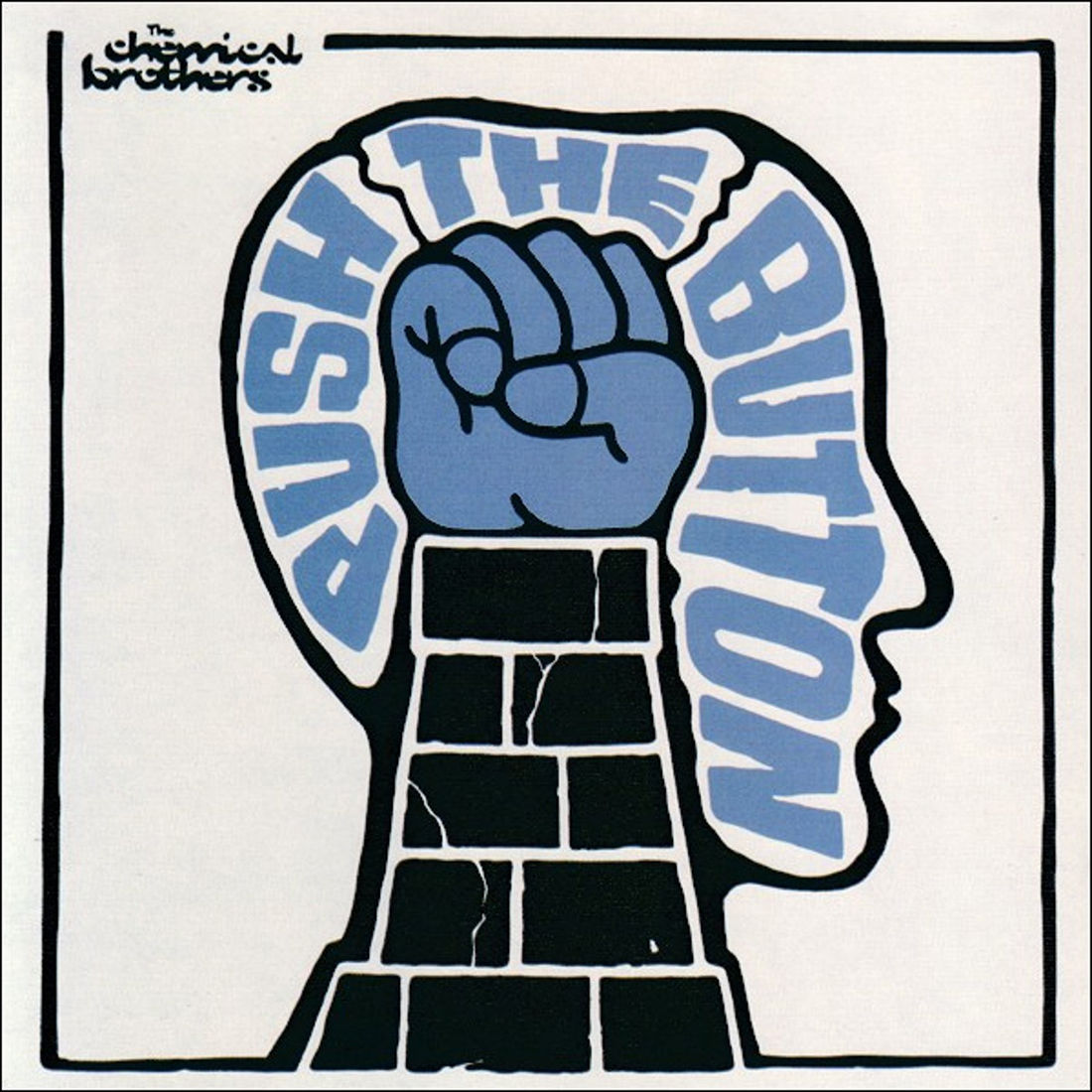
The cover of the fifth studio album by the English electronic music duo was designed by Tappin Gofton. This poses as a great example of how typography can be immersed within imagery and illustration: the words composing the title are placed in the upper part of a shillouethe’s head, surrounding a fist placed on a pillar.
This artwork showcases the rebel-feel of the album, which “blows all stylistic boundaries down in the process” (BBC Music). The designer duo utilises a typeface derived from Sho typeface, created by Karlgeorg Hoefer.
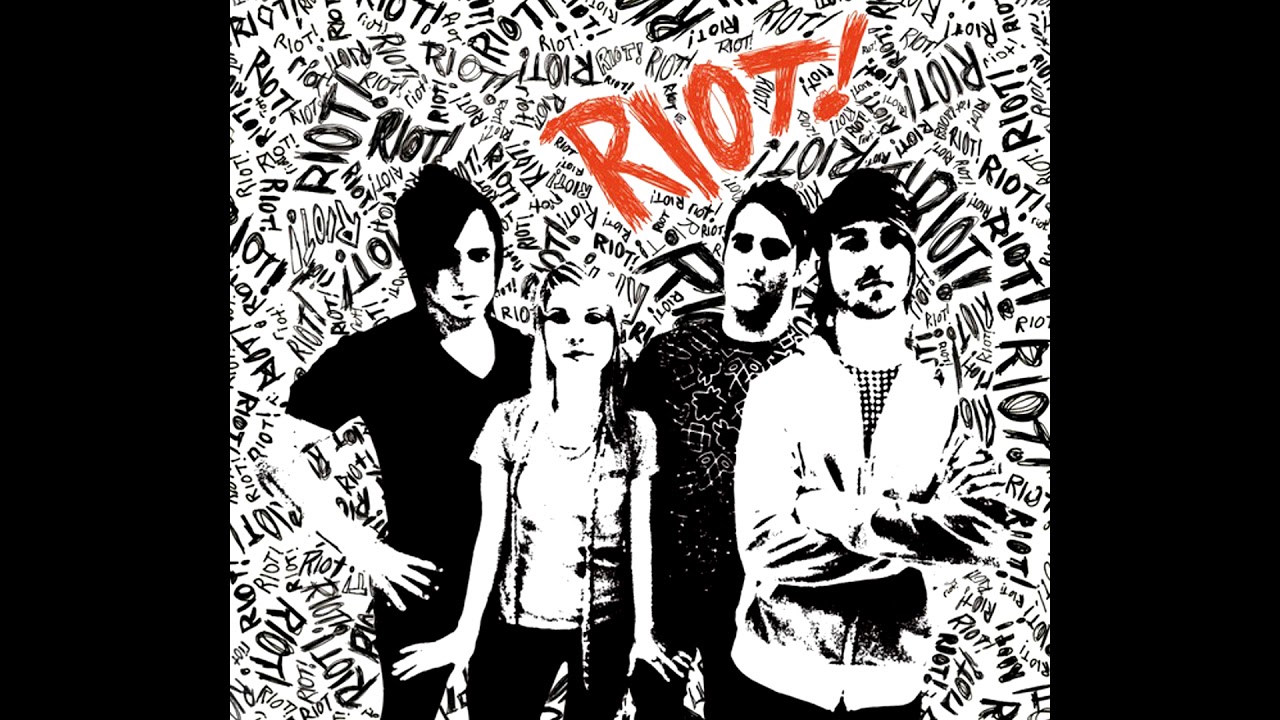
Paramore - Riot! (2007)
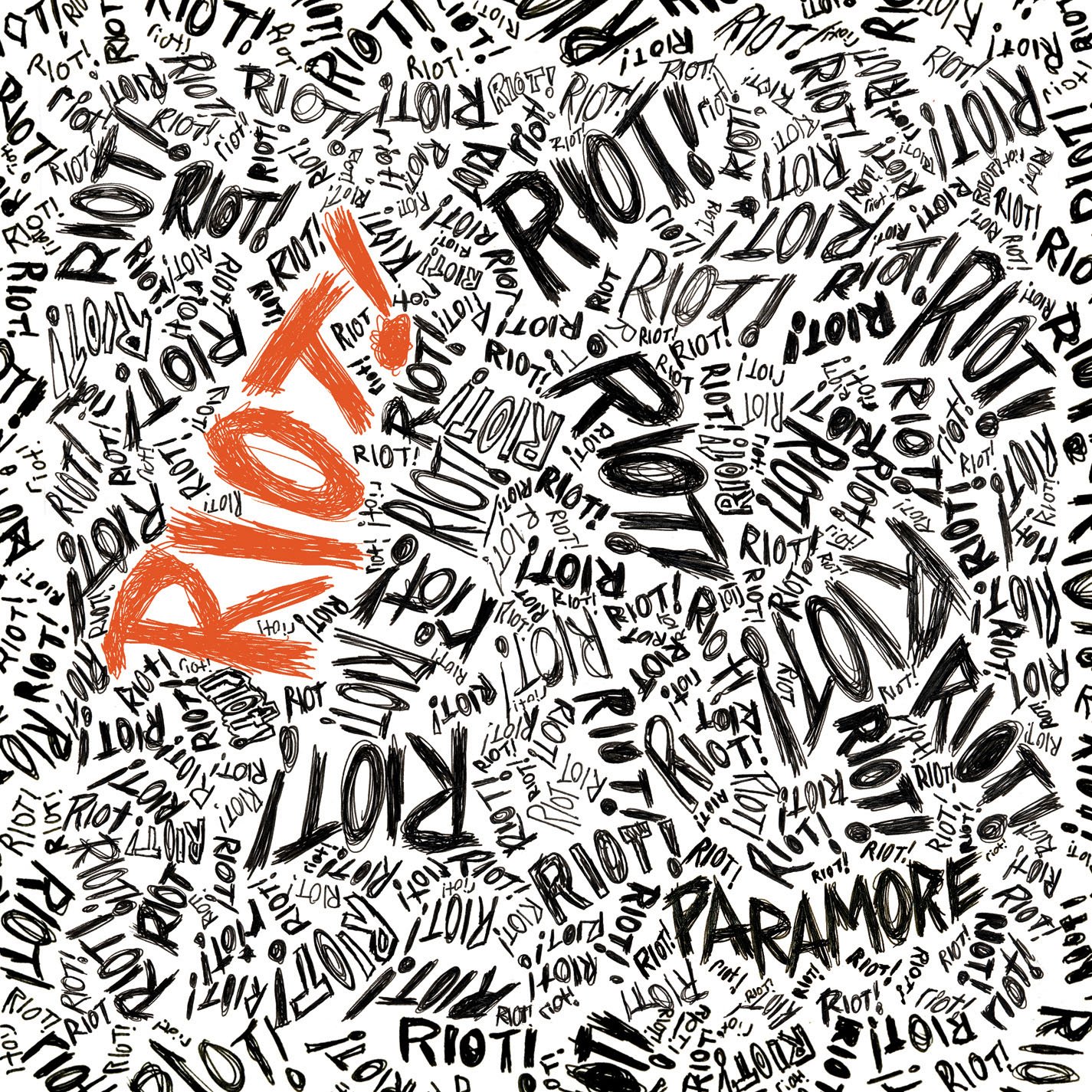
American rock band Paramore took inspiration from No Doubt’s Rock Steady cover artwork for their second studio album. The style of writing - messy, rashly skribbles of the word RIOT - as well as the colour palette used - balck and red - depict the overall energy of the album. Unorganized, cluttered, the words on the cover are giving the impression of an actual riot. Lead vocalist Hayley Williams explained in an interview:
“When we were writing it seemed like our thoughts and emotions were coming out so fast that we couldn’t control them. It felt like there was a riot within us. So the album takes our passion to a new level; it’s just all raw energy”.